

Australia is the latest member of the G8 to pledge recognition of an independent Palestine. Yet, long before Western capitals moved in this direction, recognition of Palestine resonated across India, Indonesia, South Africa, and much of Latin America—born out of a shared sense of justice and rooted in anti-colonial solidarity.
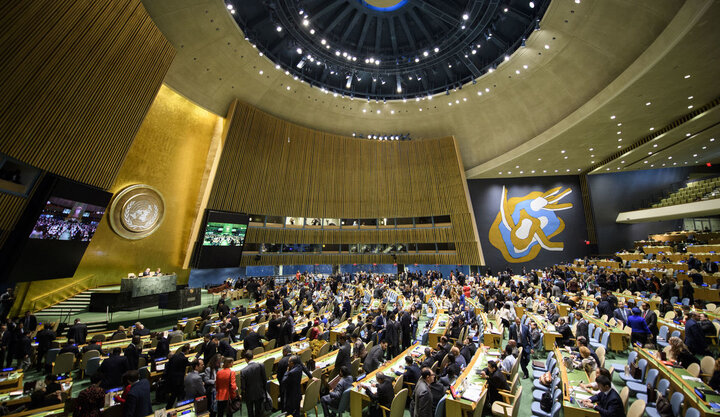
At the upcoming UN General Assembly, Australia, France, the UK, and Canada plan to officially recognize Palestine as a state, a step they previously announced. Among these four, France appears to be the only country fully committed to taking the step unconditionally. In contrast, Australia, the UK, and Canada have only spoken of possible or conditional recognition.
Some observers view these actions as significant steps toward reviving the fading two-state solution to the Israeli-Palestinian conflict—particularly given that France and the UK are permanent members of the UN Security Council. Others, however, have dismissed the move as “too little, too late.”
France defended its decision by declaring that this is a call to all nations of the world: play your role in building peace. Join the irreversible movement we have begun.
It is crucial to recall that the majority of nations—over 145 countries—have already heeded this call. History demonstrates that post-colonial leaders and nations were among the earliest and strongest voices supporting a just and lasting solution to this seemingly endless tragedy. France’s acknowledgment that depriving a nation of its right to self-determination inevitably leads to anger, violence, and war—even if belated—is therefore welcomed. Remembering the historical context also helps connect the Palestinian struggle for self-rule to the long legacy of anti-colonial and anti-racist movements.
In June 1947, even before India won independence from Britain, Jawaharlal Nehru—later to become India’s first prime minister—wrote a letter to Albert Einstein condemning Nazi Germany’s actions, rejecting fascism, and highlighting the suffering of Palestinians. Nehru warned that efforts to subjugate them would “not lead to resolution, but to continued conflict.” His warning was ignored by powerful Western states at the time.
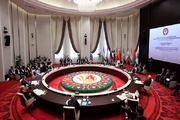
As more nations freed themselves from European colonial rule, they also recognized that a just solution for Palestine was essential to building a fairer post-colonial world order. At the 1955 Asian-African Conference in Bandung, where delegates from 29 Asian and African countries gathered, the final communiqué included that in the view of the tension resulting from the situation in Palestine and its danger to world peace, the Asian-African Conference declared its support for the rights of the Arab people of Palestine and called for the implementation of United Nations resolutions on Palestine and a peaceful settlement of the Palestine issue.
The Bandung Conference laid the foundation for the Non-Aligned Movement, which consistently issued statements in support of Palestine. The Organization of African Unity—later the African Union—also repeatedly defended Palestine, often comparing the oppressive policies of apartheid regimes in South Africa with those of Israel.
When Yasser Arafat, head of the Palestine Liberation Organization, declared Palestine an independent state in 1988, several Asian, African, and Latin American nations, including Cuba and Nicaragua, recognized it. In 2011, countries such as Chile, Brazil, Argentina, Bolivia, and Ecuador expanded this recognition. Sweden became the first Western European country to recognize Palestine in 2014, and in recent years Slovenia, Spain, Ireland, and Norway have joined the movement.
The Crime of Apartheid
Since 1994, South Africa has emerged as one of Palestine’s most consistent supporters and one of Israel’s harshest critics. Anti-apartheid activists in South Africa have long drawn parallels between the oppression they suffered under white majority rule and the Jewish struggle against fascism in Europe. They also highlighted the painful similarities between Israel and apartheid South Africa. Thus, one of the new South African government’s first foreign policy acts in 1995 was recognizing Palestine.
In 2002, Bishop Desmond Tutu published “Apartheid in the Holy Land”, in which he compared Israel’s policies to South Africa’s apartheid regime.
The 1973 UN Apartheid Convention formally defined apartheid as a crime under international law, and the 1998 Rome Statute of the International Criminal Court confirmed it as a crime against humanity. Human Rights Watch’s 2021 report documented how Palestinians have been systematically dispossessed and oppressed on the basis of identity, in ways amounting to apartheid and persecution. Crucially, the report did not merely compare Israel to apartheid South Africa but argued that Israeli practices meet or exceed the threshold of apartheid under international law.
A Turning Point: What Happens Next?
Today, the charge of genocide must also be added to the crime of apartheid. South Africa remains the first nation to bring both charges against Israel before the world. While much of the Global South has long backed Palestine, these efforts have yet to fundamentally alter realities on the ground. In the face of ongoing atrocities in Gaza, the West Bank, and occupied Palestine, one must ask: What is new about France, the UK, Australia, and Canada now moving toward recognition? What tangible difference will it make?
Though largely symbolic, these moves underscore that Israel’s actions, decisions, and rhetoric are no longer acceptable to the international community—even among its historic allies. This erosion of legitimacy should compel Israel to pause and reflect.
Predicting the outcome of the upcoming UN General Assembly session is difficult. Australia, France, the UK, and Canada may—though not with certainty—formally recognize Palestine. Yet this would not automatically grant Palestine full UN membership, as that requires Security Council approval—something the US is almost certain to veto. The recognition may also have little immediate impact on Israel’s ongoing military campaign.
What is certain, however, is that the majority of UN members will once again voice their rejection of Israel’s domination over Palestinians.
Israel is unlikely, at least for now, to change course. Still, its defiance in the face of mounting international condemnation—even from its closest allies—cannot be sustained indefinitely. Just as sustained global pressure helped dismantle South Africa’s apartheid regime, so too must global public opinion continue pressing Israel.
MNA/6593879











Your Comment